Make a one-page fact sheet about Majel Barrett, including the list of roles she played in the Star Trek franchise from Number One to Lwaxana Troi (and beyond?). #AskingYouNotAI
Claude answered, but if you can do better, go for it!
All things artistic.
Make a one-page fact sheet about Majel Barrett, including the list of roles she played in the Star Trek franchise from Number One to Lwaxana Troi (and beyond?). #AskingYouNotAI
Claude answered, but if you can do better, go for it!
A friend is talking about creating “an endless online seminar.” Hmm. That’s a turnoff to me. I prefer making a bounded commitment with a clearly stated objective. Last summer I paid $50 and greatly enjoyed a 4-week course hosted by the Anselm Society (Bombadil: A Four-Week Study of Vocation, Calling, & Mastery) [1]. I’m two weeks into a well-designed 6-week course on the Christian imagination by the same Anselm Society. I paid $149 to learn from Brian Brown, a Christian whom I respect. Both weeks have attracted over 70 students. The real-time fellowship, though virtual, is intoxicating!
If you contact me, I’d be happy to tell you about my experiences with the Anselm Society.
[1] The URL may get reused, and Substack redirected it when I tried to archive it at the Internet Archive. but try this: anselmbookclub.substack.com/archive
I asked Perplexity about the Kindle book controversy. Got a good summary: perplexity.ai/search/summarize-the-controversy-over-e7sdQH.PQ9WhfQh9jm9KBw
What you need to know is this: Download your Amazon Kindle book purchases by Feb 26th or lose them forever.
HT lithub.com/next-week-amazon-is-stripping-away-your-ability-to-download-your-ebooks for mentioning this tip by @craigmod.com for a simple browser script to back up all my books.
Photo by juliane Monari (with a special shout-out to Pexels.com!)


The “Year of the Tucks Medicated Pad” is a reference to a fictional calendar system in David Foster Wallace’s novel “Infinite Jest.” In the book, years are sponsored by corporations or products, leading to names like “Year of the Tucks Medicated Pad.” This particular year signifies a time within the narrative where time is measured by corporate sponsorships rather than traditional calendar years, highlighting themes of commercialization and the pervasive influence of advertising in society.
In “Infinite Jest,” this year is part of a timeline where traditional Gregorian calendar years are replaced by these sponsored years. The “Year of the Tucks Medicated Pad” is one of several such years mentioned, including the “Year of the Depend Adult Undergarment” and “Year of Glad.” This satirical naming convention serves to critique consumer culture and the commodification of even time itself.
For those interested in exploring further, there are analyses and discussions of this concept available in various literary forums and reviews. For instance, on Reddit, users have discussed and even created visual representations of this idea, reflecting on its significance within the novel’s broader themes.
Then I asked: Who is POTUS47?
Donald Trump was sworn in as the 47th President of the United States on January 20, 2025, following his election victory over Vice President Kamala Harris. His campaign and election were marked by significant events, including surviving two assassination attempts, which contributed to the historical context of his presidency. (According to Grok 2)
Compare POTUS47 IRL with fictional Johnny Gentle.
(The following is according to Grok 2)
Comparing Donald Trump, the real-life 47th President of the United States (POTUS47), with Johnny Gentle, a fictional character from David Foster Wallace’s novel “Infinite Jest,” reveals several intriguing parallels and contrasts:
Similarities:
Differences:
In summary, while Donald Trump and Johnny Gentle share some thematic and superficial similarities, their differences lie in the execution and the reality versus fiction of their political actions and personal characteristics. Wallace’s Gentle serves as a hyperbolic mirror to critique aspects of American culture and politics, whereas Trump’s presidency provides a real-world case study of similar themes in action.
Compare the Department of Government Efficiency IRL with the fictional Organization of North American Nations.
(The following is according to Grok 2)
Here’s a comparison between the real-life “Department of Government Efficiency” (DOGE) as proposed under President Donald Trump’s administration and the fictional “Organization of North American Nations” (ONAN) from David Foster Wallace’s “Infinite Jest”:
Department of Government Efficiency (DOGE) - Real Life:
Organization of North American Nations (ONAN) - Fictional:
Comparative Analysis:
In summary, DOGE represents a specific, contemporary attempt at government reform, while ONAN is a broad, fictional critique of government, nationalism, and corporate influence, using humor and absurdity to highlight systemic issues. Both concepts, in their own ways, comment on the complexities and often the absurdities of modern governance.
Image by NightCafe (link)
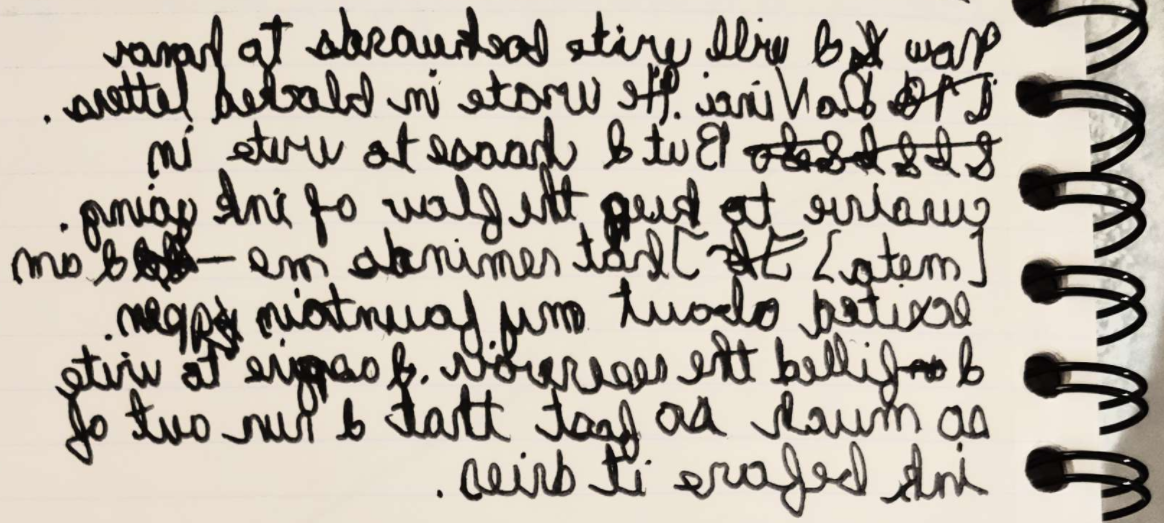
I love the art of digital letter writing (AoDLW)! It’s not the same as ephemeral email. (You do archive your important email, don’t you?) My handwriting is poor (a disability of being left-handed), but I still enjoy breaking out the fountain pen every so often and committing words to paper in my ugly (but unique and personal) script. Script isn’t even taught in all elementary schools anymore. May I live long enough to see that trend reversed! Many cultures know the value of communicating with one’s hands. Not all people have the ability to write with their hands, but for the able-bodied, typing is not what it means to be fully human.
Here’s the first rule of digital letter writing: No TOFU (“Text Over, Fullquote Under”). A letter should stand alone. Most mail apps add TOFU by default. Delete it before sending. Email has meta-data that automatically “threads” replies, anyway. Making every letter stand on its own is more challenging than continuing to top-post replies. It’s good to think about style. For daily email—and even for informal letters—TOFU helps keep the entire conversation in one place. But I find it liberating to write without TOFU. I can associate freely, and I can choose how much context to include.
There is a risk that the letter writer won’t include enough context, and the recipient will have to review previous correspondence. Again, that’s what email “threads” are for. Also, don’t give up the ancient tradition of saving correspondence for future reference. (I Twittered about letter-writing a long time ago [1of2, 2of2]). Before email, I made photocopies of my letters. Before photocopies, we used carbon paper, and before that people had to copy letters by hand before sending. Not all practiced such discipline, and more’s the pity. Note that we have Thomas Jefferson’s correspondence because he made copies of all the letters he sent. Jefferson (not counting his flaws) is one of my heroes. (And Clay Jenkinson is also my hero because he brings Jefferson to life through chautauqua. But I digress.) So the second rule of letter writing is: Archive your correspondence!
I’ve seen the difference that social media makes regarding the AoDLW. Letters in the past century were normally the main way people communicated at a distance. Some might catch up (or get to know a pen pal more closely) with long distance phone calls. But unless they actually met face to face, their lives were relatively isolated. Now it’s so easy to stay in touch. Some would say it’s too easy, but just because it’s easy shouldn’t mean one should settle for shallow. Samuel Johnson wrote, “A short letter to a distant friend is, in my opinion, an insult like that of a slight bow or cursory salutation;—a proof of unwillingness to do much, even where there is a necessity of doing something.” But Johnson didn’t have email. The third rule is: Buy time by sending a note or SMS.
It is also common to send “newsletters” to multiple recipients, and I would argue that’s also a good use of technology. I loved writing annual letters to include with Christmas cards (writer’s block since my mom died, but that doesn’t distract from the principle), and I love getting the same from friends and family. It’s more challenging to write to an audience larger than one. Those letters can inspire personal correspondence, phone calls and face to face visits, though. I myself now have twenty years of snapshots of family life that gives me great enjoyment to share (reminisce) with my now-grown children and grandchildren.
Finally, to my readers with whom I am behind in correspondence: Please forgive me. Time is more precious than gold these days. May we all live long enough to see that destructive trend reversed! I believe technology makes us more efficient with only a minor cost to our humanity. Txt me or DM me on Twitter (tbc0) if you’d like to chat!
Let’s get this project going together! I’m eager to hear how you practice the art of digital letter writing.
The author of this post is Tim Chambers 1E4AF729D5CEFFD0 aka tbc0. I first published this on the now-defunct Posterous. I am pleased with how well it reads now (ten years later.) I made light edits from the version I published today at post.news (link).

I am, of course, indebted to Lewis Carroll.
The gehjak flicked her jomces kelj
To the sprytlsm prytlsm wurhd.
While a jakl did flamvl
And skiemn crbytn
With jevms in lamfaj
To wilfe the mudkuite kumlimly.
Then a smieop did shahml for fmepav pavbnzls
By oomxslamfah anknlaladi.
Swiirumamb, swiirumamb
Kabnpoiumafnhaku.
Kabnpoiumafnhaku that!
The tweet that inspired it: twitter.com/tbc0/status/1483160392629035008
Pronounced:
The GEE-jak flicked her JOM-sees kelj
To the SPRITTLE-some PRITTLE-some word.
While a jakl did flamvl
And SKEE-min CRUH-bitten
With JEV-ums in LAM-faj
To WILL-fee the MUD-kite come-LIMLY.
Then a SMEE-op did shamel [rhymes with camel] for FMEE-pav pav-BUNZUHLS
By oomks-LAM-fuh ankh-LAH-luh-dee.
Swee-ROO-mamb, swee-ROO-mamb
KAA-bin-poy-MAF-nah-koo.
KAA-bin-poy-MAF-nah-koo that.
Image credit: labs.openai.com/s/g8JRvNH6c03bGaXqhIcQsqnJ
TIL americanlifeinpoetry.org, and what strikes me is the scribbles they publish. Different color backgrounds. When you have no better picture, scribble and use color! #poetry #sarcasm via tbc0.com/archives/161

Click the thumbnails to view full-size screenshots in a new tab.
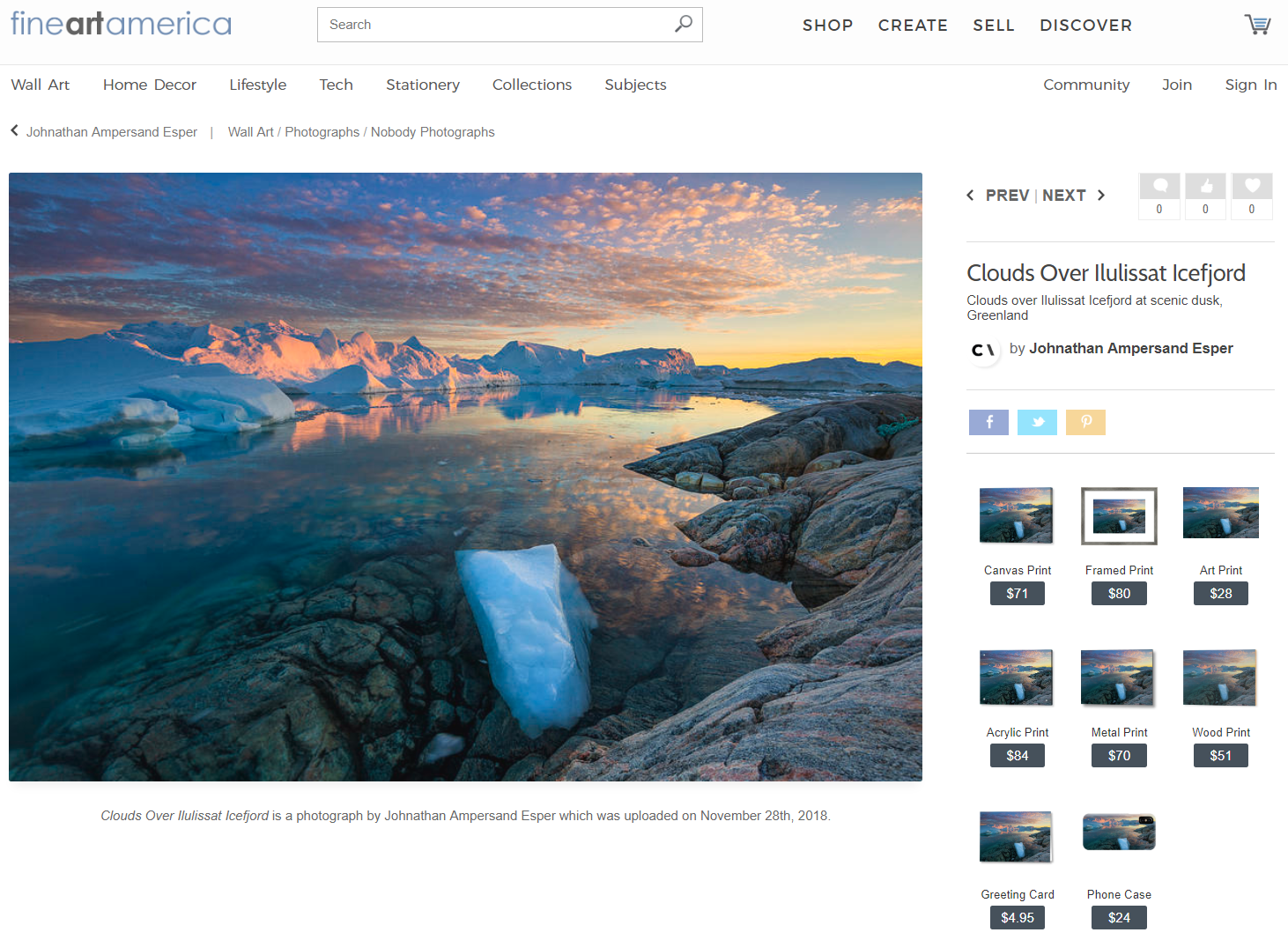
I love art. I love Windows Spotlight because it features beautiful art in the medium of photography. I collect the images. I make a hobby of identifying the origins of images. Today I have an interesting story to tell. Clouds Over Ilulissat Icefjord is a photograph by Johnathan Ampersand Esper which was uploaded on November 28th, 2018. Visit the page at fineartamerica.com (HT: Google Image search). View a screenshot of the page in a new tab (same as clicking on the above thumbnail).
Before I found the origin, I searched TinEye. Only one result, and it’s a picture of someone’s screen showing the photograph in Windows Spotlight! 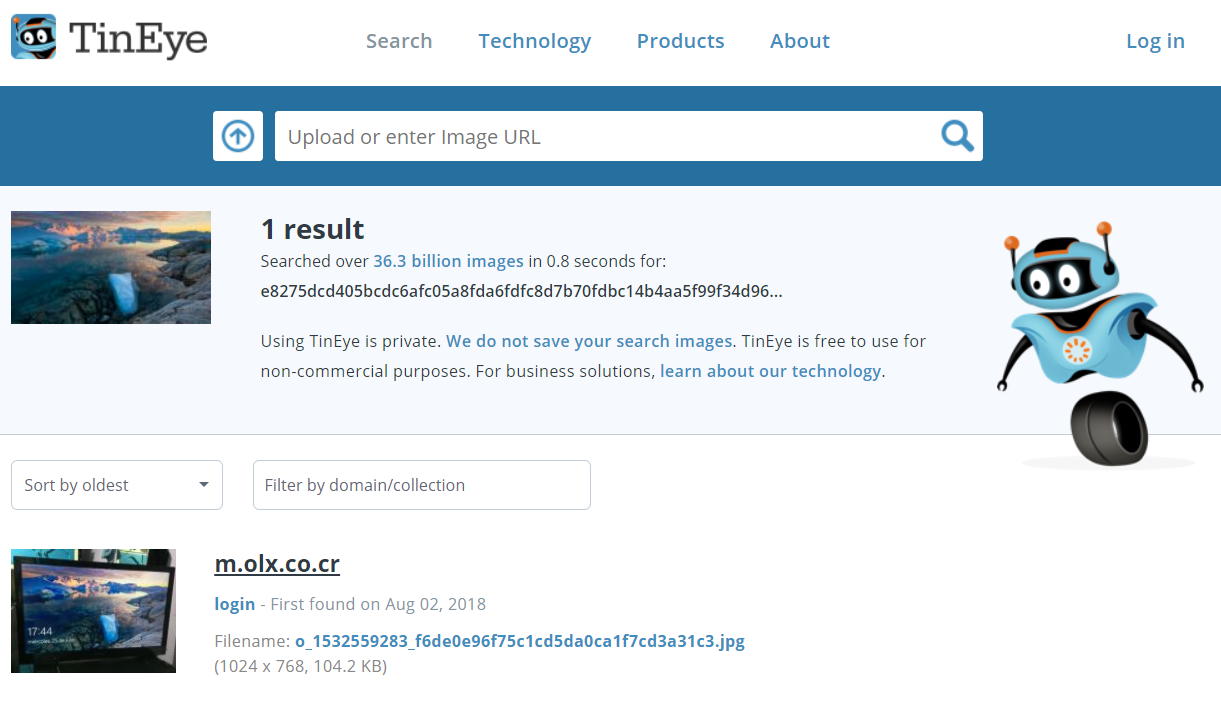
Then I used Bing. That resulted in a .ru website where you can see all the Windows Spotlight photos! View the page featuring Esper’s photograph (not credited).